
You can trust the professionals at P&M PERSONAL INJURY LAW to fight for your rights in your time of need.
We are sympathetic to the difficulties involved in restoring and maintaining your lifestyle after an accident. With our years of expertise and dedication, we are committed to helping you and your loved ones get back on your feet.
At P&M Personal Injury Law, we pride ourselves on the quality of our legal services which is a direct result of our diligent selection of legal representatives. Our conveniently located office in Toronto, offers the benefits of a large firm with a boutique firm, client-centered approach. Our strength as a firm is directly related to our reputation. Our success is a result of employing a team that stays on the forefront of trends in law and personal injury.
We believe that it is not nearly sufficient for a legal representative to understand the legal system – we must also understand your unique circumstances and culture. We set our standards high for providing experienced legal representation in over 10 languages so that no key details are overlooked and you can truly feel comfortable working alongside of someone that understands you.
Your initial consultation is always FREE and you DO NOT PAY unless we obtain compensation for you!

In 2018 there was an estimated 35, 746 fatal and personal injury collisions in Ontario. Unfortunately, this means that car accidents are more common than many would think. To make matters worse, if you have been in an accident, the legislation and court system can make navigating your claim difficult and confusing. This is further compounded by the fact that such accidents are often traumatic, and the moments afterward can be a blur, including feelings of fear, anger, frustration, and anxiety.
This article will explain, in a simple and straightforward manner, what your legal options are after a motor vehicle accident.
Read more
When the temperature drops below 0º, Ontario residents brace for the inevitable onset of snow and ice. The winter weather also brings hazardous weather conditions to municipal sidewalks. Ontario’s Municipal Act outlines some of the rules and tenets of slip and falls on municipal sidewalks.
An injured person should be aware of the strict notice period found in the Municipal Act. An injured person has 10 days to provide written notice to the municipality. This notice should include the injury, identity of the injured person, the date, the time, and location of the fall. An injured person who does not put the city on notice within the timelines prescribed by the Municipal Act may be barred from starting an action for the recovery of damages.
Read more
It is common for an employee to experience a disability leave at some point in their careers. Mental illness in particular is growing in prominence as a cause for a short-term or long-term disability leave. According to Manulife Financial Group, disability claims based on psychiatric injury, primarily depression, are growing at the fastest rate. Among youth in particular (15 to 24 years old), mental illness related disability is the most common type of disability.
Given the prevalence of disability leaves, many employers will offer policies of Short-Term and Long-Term Disability. Short-Term and Long-Term Disability Benefits will protect a person’s monthly earnings in the event of disability. Disability benefits are simply income replacement insurance in the event of injury or illness.
Read more
Within the last 10 years, scientists have become increasingly aware of the causes and symptoms of a traumatic brain injury. A traumatic brain injury may be triggered even in the absence of a serious blow to the head. For example, a new study from the University of Rochester found that a single season of college football could cause brain damage.
Traumatic brain injuries can also be a consequence of a slip and fall or a motor vehicle accident. An injured person need not bump their head to experience a traumatic brain injury. Even a violent headshake could cause serious injury to the brain.
Read more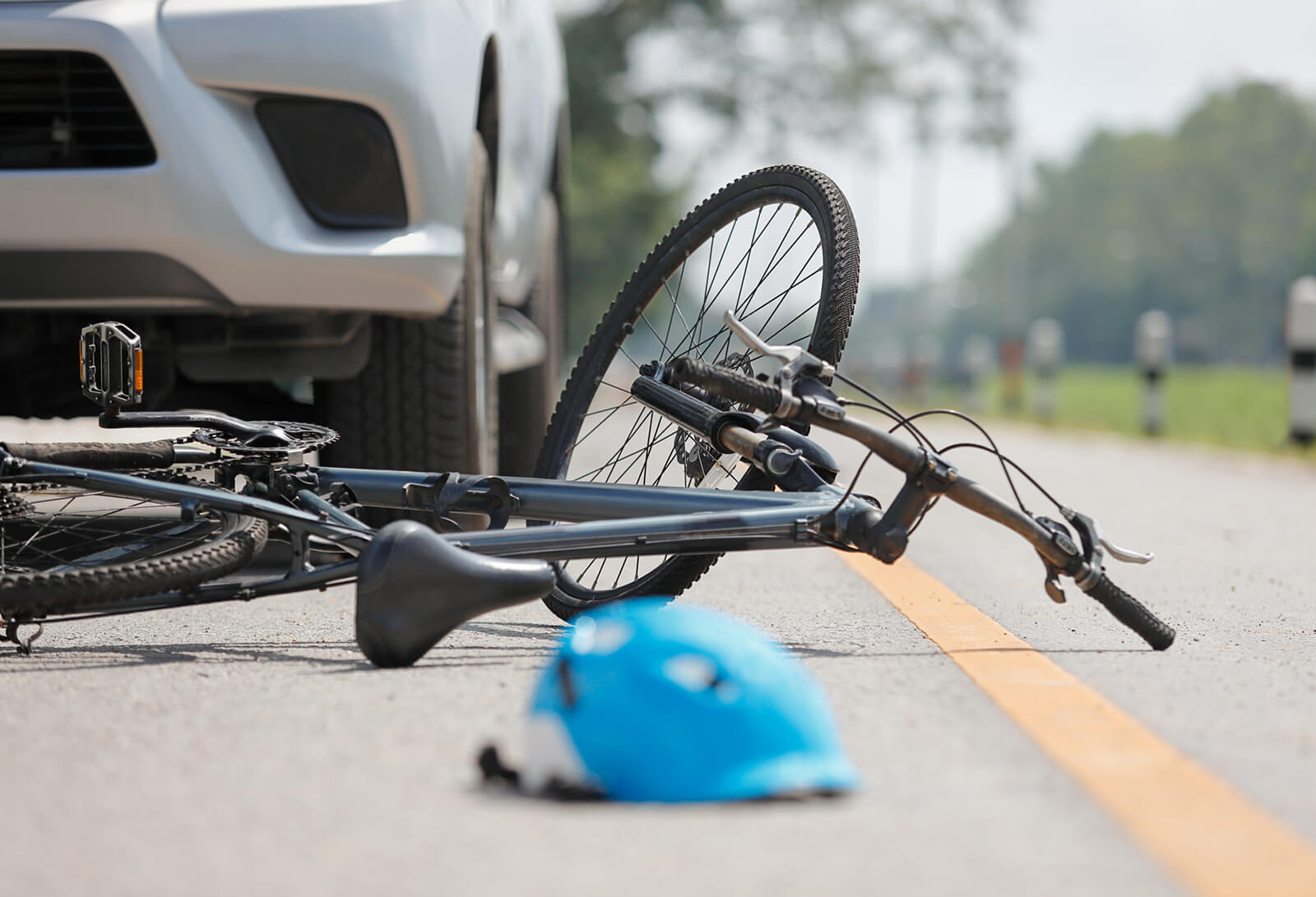
The weather will eventually improve again. With the beautiful weather comes the desire for Torontonians to enjoy the great outdoors, and it is important to be mindful of the dangers posed to pedestrians and cyclists. Data indicates that the summer months are the deadliest for these groups with regards to the potential for auto collisions.
Active transportation collisions are most likely to occur at intersections and at major arterial crossings. Toronto ranks poorly amongst other Canadian cities for road safety for pedestrians and cyclists, and the estimated cost of collisions is over $60 million a year.
Read more
Ryan has practiced almost exclusively in the area of personal injury law for his entire legal career. After...
Read more
Advocating for the rights of injured persons for over 21 years Vadim is licensed under the Law Society...
Read more
Tricia has been practicing in the personal injury field since her call to the Bar over 25 years...
Read more
Domenic has practiced exclusively as a personal injury lawyer since completing his legal education at Osgoode Hall Law...
Read moreI suffered serious injuries after a bicycle I was riding was hit by a car. I had to learn how to walk again, but thanks to P&M, they made all the arrangements for me to get well, while not having to worry about financial consequences. I highly recommend P&M Personal Injury lawyers as a team of caring and competent lawyers who will do their best to help and get the best settlement from insurance companies.
 Nash B.
 I hired P&M after being involved in a car accident where I was severely injured and was unable to work for over 2 years while recovery took place. P&M arranged proper care and rehabilitation, and allowed me to get back to my feet and get my life back. I will always be thankful to the great team at P&M.
Dennis T. If you have been injured in an accident and are seeking a personal injury lawyer, you may wondering about cost. Personal Injury lawyers typically work on a contingency fee basis, meaning that legal fees are only payable if your lawyer is able to recover money for you, whether that be through a settlement or an award from court. This article will discuss how contingency fees operate in Ontario and what additional costs you may be responsible for as your case progresses.
A contingency fee arrangement involves paying legal fees as a percentage of the compensation that you recover from your legal claim, plus HST. Contingency fees are extremely common in personal injury claims and are regulated by the Law Society of Ontario.
When you hire a personal injury lawyer, you will not be required to pay upfront legal fees or hourly rates, and you will only need to pay legal fees if you receive a monetary award.
If you lose your case, you will not need to pay the legal fees to your lawyer, however, there may still be other legal expenses that you are responsible for.
Contingency fee arrangements are beneficial for individuals who are pursuing a personal injury claim because they will not have any upfront financial pressure. It will be a difficult time after an injury, as you will be recovering from your injury, may not be able to work, and you may need to pay for medical treatment along the way. Contingency fee arrangements will relieve the financial burden of having to pay thousands of dollars to a lawyer to start your case.
Contingency fee arrangements also share the risk of your case, as your lawyer will not be paid if they are unsuccessful. Therefore, your lawyer will be dedicated to helping you to the best of their abilities.
Additionally, contingency fee arrangements allow for injury victims to be able to pursue personal injury claims even if they cannot afford to pay hourly legal bills. These types of arrangements defer payment until funds have been recovered.
Personal injury cases are often extremely complex, lengthy, and require a lot of work to bring the case to a resolution. Therefore, contingency fee arrangements make this process more financially manageable for individuals, allowing them to focus all of their attention and resources on recovering.
At P&M Injury law, we work on a contingency basis and charge no more than 33% of any settlement or award, plus HST.
The contingency fee percentage will not apply to any amounts that are awarded to help pay for disbursements or taxes.
What About Other Fees?
In a personal injury claim, legal fees are not the only fees that you may need to pay.
Disbursements
During the life of a case, third parties will be involved such as medical experts or expert witnesses. Additionally, there are court filing fees, transcript costs, and other out-of-pocket expenses required to advance your case. These are called “disbursements” and are not classified as legal fees.
Typically, your lawyer will pay these disbursements as the case progresses and will recover these amounts at the end of the case from the settlement or award. Depending on the complexity of your case, disbursements can sometimes be significant, however, your lawyer will keep you informed on disbursements as they are incurred.
In a court proceeding, “costs” are sometimes awarded to the winning party or can be negotiated in a settlement. “Costs” are used to compensate for lawyer fees, disbursements and taxes incurred during litigation. They are entirely discretionary and typically aim to only cover a portion of the expenses.
Contingency fee arrangements do not protect you from cost awards, and you may be required to pay costs if you lose. However, as your case progresses, P&M Injury Law will assist you in assessing the risks and likelihood of possible costs and advise you accordingly to reduce the risk.
If you win your claim, or settle your case outside of court, those funds that are awarded to you will typically be paid to your law firms trust account. They will prepare an account statement showing the total settlement or award, what the contingency fee is, any taxes, and disbursements that are outstanding. It will also include the net amount you receive. The contingency fee and any disbursements still owing will be deducted from the amount you receive.
If you do not win your claim and are unable to reach a settlement, you will not be required to pay any contingency fees. However, you may still be responsible for any disbursements or costs if ordered by a court. Your lawyer should discuss these risks with you so that you can make informed decisions throughout your case.
You always have the right to change lawyers and terminate your contingency fee arrangement at any time. The Law Society of Ontario specifically ensures that you are not unfairly penalized for terminating your contingency fee arrangement.
If you decide to terminate your arrangement, you may still owe fees for any work already performed. This is typically assessed on an hourly basis and will include any disbursements incurred by that lawyer.
The terms regarding termination will be set out in a written contingency agreement. It is important that when you enter into your contingency fee arrangement, that you understand your rights and obligations, and seek independent legal advice if you need any additional information.
Suffering from an injury in a car accident, slip and fall, or other accident in Ontario can cause significant physical and financial disruptions to your life. Injuries may interfere with your ability to work and require extensive rehabilitation, which can be a heavy financial burden. The legal path to receiving financial compensation involves pursuing a personal injury lawsuit, which in some cases can be a complex process.
You may be wondering about the process of a personal injury lawsuit in Ontario and how long your lawsuit may take, as a timely resolution may be top of mind for you. Below, we outline the general timeline for an Ontario personal injury lawsuit, factors that may slow things down, and strategies to expedite your case.
After properly attending to your medical needs following an accident, you should consult with an Ontario personal injury lawyer. A lawyer will collect the necessary information such as how the injury occurred, the severity of your injuries, and who may be responsible. At P&M Injury Law and most personal injury firms, consultation is free.
It will be important to receive medical treatment as soon as possible, which will assist in your recovery as well as documenting your injuries. Our team will be able to help coordinate the necessary medical or specialist care and will begin gathering evidence and documentation related to your injury. This evidence can include police reports, medical records, and expert reports.
If appropriate, the lawyer will prepare and file a Statement of Claim to formally start the personal injury lawsuit, which will describe what happened in the accident, identify the defendants, and specify the compensation sought. The defendant will then file a Statement of Defence in response.
The lawsuit will then proceed to the discovery phase. Each party will provide the other with an Affidavit of Documents, which is a list of relevant documents. Each party will also participate in an Examination for Discovery, which is an opportunity to question a party under oath to better understand their side of the story and to assess credibility.
After discovery, the parties may negotiate with each other to reach a settlement. Mediation is usually the next step, where both sides work together with an external mediator in attempt to reach a resolution that satisfies both parties. Many Ontario personal injury cases are settled around this time.
If the case is not resolved at a mediation, the next step is scheduling a trial. Before trial, the lawyers will finalize expert reports, prepare witnesses and gather evidence. The parties must also attend a pre-trial conference with a judge, where the parties will discuss settlement and trial management. If no settlement is reached here, the claim will proceed to trial which can typically last 8 - 15 days.
Throughout the life of your Ontario personal injury lawsuit, there will be many opportunities for settlement negotiations. Negotiations can occur at every stage of the process, such as after medical information or reports have become available, after discoveries and mediations, or even during trial preparations. Although our lawyers at P&M Injury Law are trial experts and do not shy away from protecting your rights, the vast majority of Ontario personal injury lawsuits result in a settlement without a trial.
Understand the Timelines: While taking a case to trial can take upwards of 3 to 5 years, there are opportunities to negotiate along the way.
If you have been injured in Ontario, you will have questions about your role as a client in a personal injury lawsuit. Many people wonder what to expect in a lawsuit and how a personal injury lawyer can help. It is important that you connect with a personal injury lawyer for advice related to any ongoing or potential injury as soon as possible.
Your Role
As an injured party in an accident, you will be the primary source of information about what happened and what you are going through. This includes the specific details about how the accident occurred, how it has affected your daily life, and what types of treatment you will be receiving. Providing accurate and detailed information to your lawyer is extremely important.
The length of a personal injury claim depends on many factors including liability and injuries. It is not uncommon for a motor vehicle accident lawsuit to take 2 to 5 years to settle. It is important to stay in contact with your lawyer, especially to let them know to any changes in your life, throughout the lawsuit.
Here are some of the things you can do as a client to help your case:
Being actively involved will help to ensure that your claim accurately reflects what you have gone through and the losses you have suffered. If your case ends up going to trial, it is important to have a clear record of what you are experiencing.
To support your lawyer in building the case, you will be asked to provide several documents.
In addition to medical information, you will also need to provide records of employment, income information, receipts, and any other documentation that may help to show your financial losses. These will all be reviewed and compiled to assist in calculating your compensation.
Throughout the lifetime of your case, you will need to attend meetings with your lawyer to review your case. In addition to meetings with your lawyer, you may also be required to attend Examinations for Discovery and other independent medical or insurer examinations. Your lawyer will prepare you for these so you can feel confident when attending these meetings.
Building a strong lawyer-client relationship is important. You want to ensure that you maintain clear and consistent communication. Your lawyer should also do the same with you. Our lawyers at P&M Injury Law will be sure to keep you updated throughout the stages of your case, including:
After an accident, clients often ask what kind of results can be expected with their case. This is an important question to ask because a personal injury claim can affect your health, income, family responsibilities, and long-term financial security.
No lawyer can guarantee a result or give a meaningful prediction based only on another client’s outcome. Every case is dealt with on the face of its individual facts including how the accident happened, the nature and duration of the injuries, available insurance coverage, medical evidence, employment history, pre-existing conditions, the effect on daily life, and whether liability is disputed.
Rather than offering a one-size-fits-all “success rate,” we focus on giving clients a realistic assessment of their individual claim.
A percentage alone does not tell the full story. One firm may define success as obtaining any settlement, while another may count only cases resolved after trial. Some claims may be discontinued because new evidence shows that a lawsuit is not in the client’s best interests. Others may settle early because liability is clear, while more serious or disputed claims may require years of investigation, negotiation, mediation, or litigation.
Our approach is more useful. We review the evidence, identify the legal and practical issues, and explain the strengths, risks, and next steps plainly. We do not promise results that cannot be responsibly promised.
A strong claim is not simply one involving a serious accident. It must be supported by reliable evidence that demonstrates both liability and the real impact of the injury on the person’s life.
In some circumstances, a firm can share past verdicts and settlements to help illustrate the types of cases a firm has handled. However, they must be presented cautiously and responsibly.
A personal injury lawyer should be prepared to discuss their experience with similar types of claims, explain the process, and give a candid assessment of the issues that may affect the case. At the beginning of a file, the available information may be incomplete, medical recovery may still be uncertain, treatment records may be outstanding, and the insurer’s position may not yet be known. As evidence develops, the assessment of the claim may change.
We keep clients informed so that they can make practical decisions at each stage. Our objective is not to make the biggest promise at the first meeting. Rather, it is to build the strongest available case, pursue fair compensation, and give each client straightforward advice based on their case.
A good personal injury lawyer should not simply tell a client that they have a “strong case.” Early in a claim, it is important to identify both the helpful facts and the potential challenges so that you can make an informed decision.
No lawyer can give a reasonable opinion without reviewing the available evidence, medical records, insurance information, and the other side’s position. However, there are several common issues that may affect a personal injury claim in Ontario.
One of the first issues to explore is who is responsible for the accident. In some cases like a rear-end car accident, liability is clear. In others, the insurer may argue that the injured person contributed to the accident. A finding that the injured person was partly responsible can reduce the damages they recover.
Early evidence is often critical to a claim. This includes police reports, witness statements, photographs, dashcam footage, surveillance video, vehicle damage, cellphone records, and accident reconstruction evidence may all help establish what happened.
Evidence is usually strongest shortly after an accident. However, a potential weakness may arise where there are no independent witnesses, no video footage, conflicting accounts of the accident, or limited documentation of the injuries. An insurer may argue that the injuries were minor, unrelated to the accident, caused by pre-existing conditions, or not serious enough to justify the treatment or compensation being claimed.
For that reason, it is important to document symptoms, attend recommended treatment, keep records of expenses and missed work, and report changes in physical, psychological, or daily functioning to treating professionals. Medical evidence is not just paperwork and is central to proving the real-life impact of an injury.
Many people have health conditions or issues before an accident. Having a pre-existing condition does not prevent recovery. However, insurers frequently examine prior medical records and may argue that the accident did not cause the claimed symptoms or that the person would have experienced similar limitations anyway.
The key issue is whether the accident caused a new injury, aggravated an existing condition, or made a previously manageable condition significantly worse.
A clear medical history, honest reporting, and expert evidence where necessary can help address this issue. Trying to hide a prior condition is always a mistake and it is better to deal with it directly and explain how the accident changed the person’s condition and daily life.
Even where liability is strong and injuries are serious, available insurance coverage can affect the practical value of the claim. In Ontario, drivers are legally required to carry at least $200,000 in third-party liability coverage, although many drivers purchase higher limits. If the at-fault driver has limited coverage, is uninsured, or cannot be identified, additional steps may be needed to determine whether other insurance is available.
A lawyer may review the injured person’s own policy, including uninsured automobile coverage and optional family protection coverage.
Waiting too long can create serious problems. Ontario’s general limitation period is usually two years from the date a claim is discovered. However there are other important limitation periods. For example, a municipality has to be put on notice within 10 days of a fall. It is important to consult a lawyer as soon as possible after an accident.
A delay can also make it more difficult to locate witnesses, preserve video footage, identify responsible parties, or obtain reliable accident evidence. Prompt legal advice allows the firm to protect the claim before these issues become harder to fix.
Our role is to investigate the facts, preserve evidence, obtain the relevant insurance information, and give clear advice about the strengths and risks of the case. A claim may have challenges but still be worth pursuing. The important question is whether those challenges can be addressed with evidence, legal analysis, and a complete understanding of the available insurance coverage.
We handle uninsured and underinsured accident claims in Ontario
It can be the case that an at-fault driver in a motor vehicle accident is underinsured or is uninsured altogether. Thankfully, Ontario insurance law allows options for compensation and recovery in the case of an uninsured or underinsured driver. At P&M Personal Injury Law, we navigate Ontario insurance law to secure compensation in accidents involving uninsured or underinsured drivers.
Are all drivers required to have care insurance in Ontario?
Under Ontario law, every vehicle driven on public roads must have a valid automobile insurance policy. According to the Compulsory Automobile Insurance Act, R.S.O. 1990, c. C. 25, it is illegal to operate a car without insurance and drivers can face fines and license suspensions if they fail to comply. Because insurance is mandatory, driving without it is considered a serious offence in Ontario, if you are injured by an uninsured driver, your legal case may involve more steps and options to secure compensation. Understanding the insurance requirements in Ontario helps explain why the legal system provides safety nets for victims in these situations.
What steps should I take after being hit by an uninsured driver in Ontario?
If you are involved in a car accident in Ontario, there are critical first steps you need to take:
Taking these steps can protect your health, your legal rights, and it creates a clear record of what happened.
What happens if the other driver’s insurance can’t cover all your expenses?
Sometimes, the at-fault driver may have valid insurance, but their policy limits are too low to cover all your losses. In Ontario, drivers are only required to carry $200,000 in third-party liability coverage. This may not be enough for serious accidents that cause severe injury. If this happens, your underinsured motorist protection or uninsured automobile coverage may step in. This insurance coverage allows your own insurer to pay the difference between the other driver’s policy limits and your actual expenses.
What if there are multiple parties who may be at-fault?
Ontario law recognizes that more than one person can be responsible for an accident. Where multiple defendants are found negligent, they may be jointly and severally liable to the injured person. We assess liability evidence carefully. Our goal is to build the strongest evidence-based case, pursue all viable defendants and insurers, and negotiate from a clear understanding of the available coverage. These cases are not simply about identifying who made a mistake, they are about ensuring that an injured person has access to benefits and compensation available to them under Ontario law.
Key Takeaways
Personal injury law is designed to compensate you for your reasonably foreseeable losses in an accident. While a lawyer cannot guarantee a specific amount at the outset of a case, a reasonable range can eventually be determined based on the evidence. Factors include medical expenses, lost income, property damage, pain and suffering, and future expenses.
Pecuniary vs Non-Pecuniary Damages
Ontario courts typically assess damages into two categories, pecuniary and non-pecuniary (also known as general damages). Pecuniary damages refer to the economic loss caused by an injury. These losses are measurable and can be calculated based on receipts, medical bills, lost income and other financial records. Past pecuniary damage covers expenses that have already been incurred by a person caused by the injury. Some considerations when calculating past pecuniary damages include appointments and travel, adjustments to the home, childcare, and/or hired help for household chores. Future pecuniary damages compensate the injured person for costs that have yet to be incurred. Some considerations when calculating future pecuniary damages are the cost of future care, loss of earning capacity, housekeeping costs, and/or future medical expenses resulting from the injury.
Courts may also award non-pecuniary losses, or general damages, to compensate the injured person for any non-monetary losses. A notable type of non-pecuniary loss if from pain and suffering from an accident. These intangible losses can be harder to quantify. While there is no mathematical formula to determine emotional distress of an injury, the court points to specific factors to approximate the value of a non-pecuniary loss. Factors include the nature and severity of the injury, the age and general health of the individual, the permanency of the injury and its effect on the person’s daily living and independence.
Some things to consider
There is a cap on non-pecuniary damages in Ontario: There is an upper cap on the amount awarded for non-pecuniary damages. This cap is often only relevant in extremely sever cases and is regularly adjusted to account for inflation. As of 2026 it is $484,000.
The “Permanent and serious” threshold limits pain and suffering award eligibility: For car accidents in Ontario, an injury must reach the threshold of “serious and permanent” to be eligible for a pain and suffering award.
Motor vehicle injuries may be subject to a pain and suffering deductible: A statutory deductible is a pre-set amount subtracted from a total award. There is an exception to the deductible if an award meets a certain monetary threshold. This deductible only applies to accident claims brought under Ontario’s insurance act and may significantly reduce total compensation.
Limitation Periods: A personal injury lawsuit should be initiated within two years from the date of the accident.
Key Takeaways
People who have been injured in an accident may be hesitant to commence legal action for fear of having to spend years going through a rigorous and lengthy court process. The truth is, most cases settle before they can reach a courtroom. Nevertheless, the lawyers at P&M Personal Injury Law are equipped with years of expertise representing clients in court and are prepared to take a case to trial if necessary.
When does a case go to trial?
Trials are emotional, time-consuming, and expensive for all parties. In many cases, all parties are better served by settling a case instead of taking it to trial. Cases can settle at any of several points before trial. Some settle following an examination for discovery, others settle during mediation or pre-trial conference. A case will go to trial when the parties cannot come to a reasonable settlement.
Personal Injury cases can go to trial based on a variety of factors including:
Does P&M Personal Injury Law have the required experience and willingness to go to trial?
Yes. Although we understand that most cases will never go to trial, P&M Personal Injury prepares for each case as though they may be decided by a judge or jury. This means collecting proper evidence, including medical records and witness statements. Our lawyers have many years of experience representing clients through every step of the litigation process including examinations for discovery, mediations, pre- trial conferences, and trials.
Key Takeaways
There is no prescribed timeline for personal injury cases in Ontario, however, many cases take 12-36 months to resolve. The timeline of a case can depend the severity of the injuries, the complexity of the issue, the insurers’ willingness to cooperate, and whether the case settles in negotiation or whether it proceeds to trial. The Ontario Rules of Civil Procedure provide general guidelines for how civil trials in Ontario proceed. The litigation process includes mandatory procedural steps before a matter can proceed to trial.
In a personal injury case, it is important to understand that it is normal for a case to take two to four years to resolve. Even if the medical evidence is strong, a client may have to wait upwards of four years before a lawyer can settle a file for reasonable compensation. However, having a complete medical record of your injuries and a clearly defined loss are some of the factors that will assist a personal injury lawyer in settling your file sooner. There are also steps on the way to trial, such as mediation, that provide an opportunity for early settlement.
It is important to note that the vast majority of cases settle and therefore do not reach trial. Cases typically only go to trial if parties cannot resolve issues of liability, damages, or both. There is no defined date or deadline for when a case has to go to trial. There is, however, a two year limitation period to start a lawsuit in Ontario.
There needs to be a clear medical record of any injuries or conditions you are suffering from because of the accident. Consistent medical evidence will help prove your injuries and ultimately encourage settlement.
If the insurer is disputing fault or the injuries caused by an accident, it is likely that they will retain a liability or medical expert for an opinion. There are usually experts retained by all parties to provide opinions on relevant issues in dispute. A case can be delayed until the parties obtain relevant expert opinions.
Generally speaking, it takes years to secure a trial date in an Ontario court for a personal injury matter. There are many steps to consider before a case is ready for trial including pleadings, examinations for discovery, mediations (where applicable), and pre-trial conferences. Each of these steps take time and planning. Courts also face backlogs and delays beyond any party’s control - this could extend a case’s timeline beyond what the parties may have anticipated.